
I forgot my padlock combination, the night before departure
Verdict
Pick : none
The object holds up against neither patience nor equipment, and its one real effect doesn't justify its price or weight.
- : you only want to stop a zipper from working itself open in the hold.
- : a plain zip tie, which does the same job for a hundredth of the price and cuts with scissors
Who it's for
Right for you if
- You only want to stop a zipper from working itself open in the hold
- You accept that a zip tie worth a few cents does the same job just as well
- You aren't looking for real protection against theft
Not for you if
- You believe a TSA lock actually protects against a motivated thief
- You're willing to pay for a certified object rather than a zip tie
- You want visible deterrence, not just a mechanical reminder
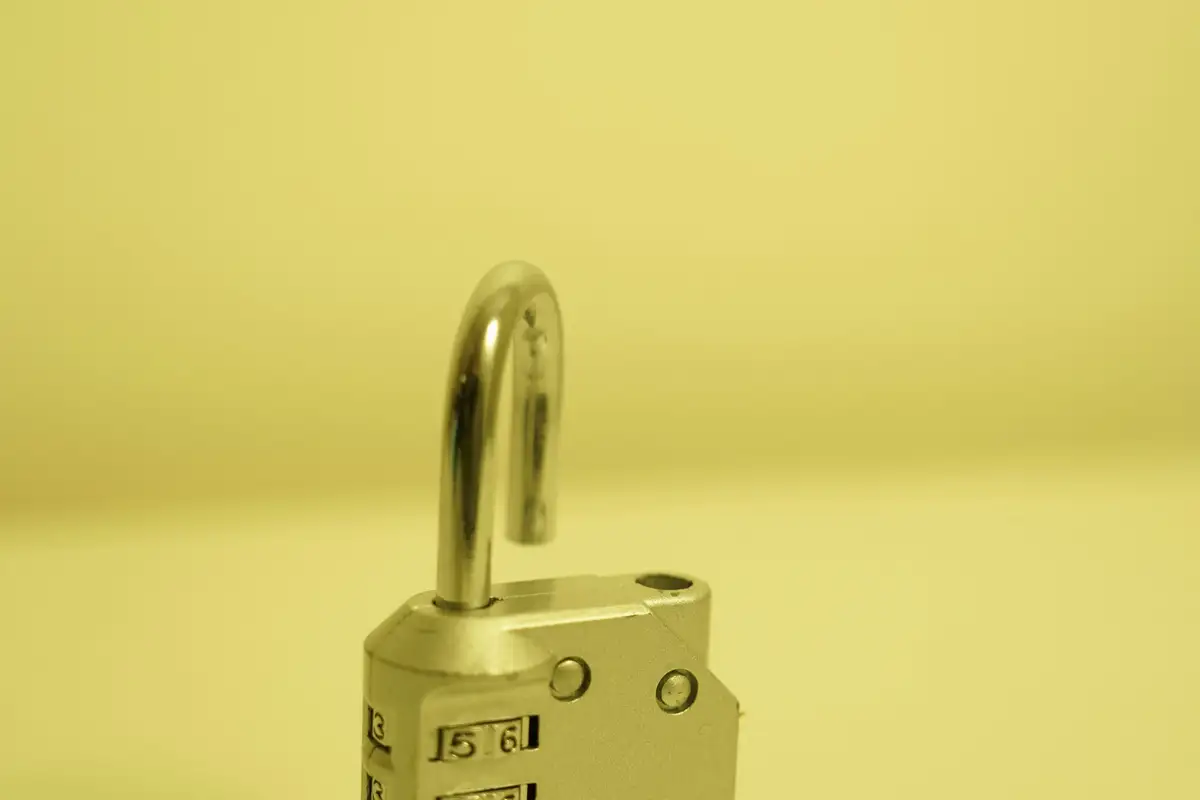
The night before I was due to leave, I emptied the bag onto the bed to repack it properly, something I never do, and that the past month had put me in the mood to do.
At the end, I went to lock the padlock back onto the zipper. Three dials, three digits. I’d set it months earlier, at a time when I was sure I’d remember, with a combination chosen specifically because it was unforgettable.
Nothing. Not a memory, not a hunch, not even a toss-up between two numbers. A complete blank.
What I did
What anyone would do. I started at zero zero zero and worked my way up.
A three-dial padlock has a thousand combinations. Sitting cross-legged on a bed, with a podcast in your ears, you can get through about twenty-five a minute once your hand finds the rhythm. The math is immediate, and it’s depressing.
It opened after about forty minutes. I didn’t even have to go all the way through, which is the only lucky break in this story.
Forty minutes. From someone who wasn’t trying to force it, had no tools, and was bored.
What I found out next
This is the part that actually bothered me, and it has nothing to do with my memory.
Padlocks in this family are certified for security screening, which means one specific thing: authorized agents have to be able to open them without destroying them. That requires master keys, and every lock type carries a code.
These keys are sold openly. Listed by their code, individually, on the very same catalogue that sells the padlocks, right next to the padlocks. This isn’t a secret leaked on some obscure forum, it’s a listing for sale online, with a product page and a delivery estimate.
I won’t go into more detail, that’s not the point, and I have no interest in writing an instruction manual. The fact is enough: the object can be opened effortlessly by anyone willing to pay the price of a sandwich, and that’s by design, not a manufacturing flaw.
So what does it actually protect against
There’s one answer left, and it’s an honest one.
The padlock stops a zipper from working itself open under pressure, in the hold or a luggage rack. It also adds a few seconds for an opportunistic hand, and those few seconds aren’t nothing: whoever went through my bag on a January train spent four seconds in it, and probably wouldn’t have pushed further.
That’s it. It’s not nothing, and it’s not what the listing sells you.
The section’s filter
Four conditions, all four mandatory.
- It fits in a forty-litre bag. Yes.
- It clears cabin security. Yes.
- It costs under about fifty euros. Yes.
- It’s objectively ridiculous and it solves a real problem. Ridiculous, yes. Real, barely, and that’s the whole point.
Verdict: no. The first no of this section, and it had to happen at some point: a site that never advises against a purchase has no judgment worth trusting.
These questions stay open because I’m not buying four padlocks to test one, and the method is in what I don’t test.
The next morning, I left the padlock in the room’s drawer, with a note saying it was open and that the combination was the one written on it. I never replaced it. What still bugs me, six months later, is having spent forty minutes opening an object I’d bought to prevent exactly that.
Ruled out
| Product ruled out | Reason | Source |
|---|---|---|
| UP Security, pack of 4 TSA-approved keyed luggage locks | Key-based opening turns my incident into a permanent lockout. A forgotten combination can be recovered in forty minutes, a lost key cannot. | Manufacturer listing, opening mechanism as stated, recorded on 11 August 2026. |
| UP Security, pack of 4 keyed TSA locks, zinc alloy | Four padlocks sold together for a need that calls for one. The sales quantity is itself a hint about the expected loss rate. | Manufacturer listing, quantity as stated, recorded on 11 August 2026. |
| Travel Inspira, luggage strap with built-in lock | It straps around the bag, it doesn't close any opening. The outer pockets stay accessible, and those are the ones that get gone through. | Manufacturer listing, function as stated, recorded on 11 August 2026. |
What I can't tell you
- Is a locked bag searched more or less often than an unlocked one? Both theories circulate, and neither is backed by public data I have been able to find.
- Do four-dial models change anything? They multiply the number of combinations by ten, which shifts the problem without solving it, and I have not had one in hand.
- Does the mechanical strength stated in the listings mean anything? None of them cite a test standard.
This choice follows the manifesto: no top-10 lists: every object is judged on its own merit. read the manifesto
Revision log
- Reviewed on 12 August 2026. What changed:Periodic review: nothing to report.
Latest articles

A room with no clothesline, in Lisbon, in January
Two t-shirts washed in a sink, a room at fourteen degrees, five objects from the same family, and only one that doesn't add a problem.

The silk sleeping bag liner deserves better than its reputation
A summer-camp object, a stated hundred and twenty grams, and a question you only ask yourself once you're lying down.