
Someone asked if I work on night trains
Contents
The message arrived while I was still in Chiang Mai, and I left it unanswered until Đà Nẵng, which makes three weeks and isn’t very graceful. A reader wanted to know if I worked on night trains. And, if so, how I organized myself around it.
The second half of the question is the one that stopped me. It assumes there’s an organization, a setup, some small mechanic I could describe. I’d just spent a night on a train between Hanoi and Đà Nẵng, laptop open on my knees, and I have nothing like that to report.
So I’m going to give the real count, including the nights that produced nothing, because a count with the failures removed isn’t a count anymore.
The count
Three nights of transport since the start of spring.
A night bus in Thailand, between Bangkok and the north. Actual work done: zero minutes. I didn’t even take the laptop out, and the only useful thing I managed was four hours of sleep in one-hour chunks.
A thirteen-hour flight, in April. Zero as well, and there I don’t have a solid material excuse: there was a tray table, power, a seat. I watched two films whose titles I can’t remember.
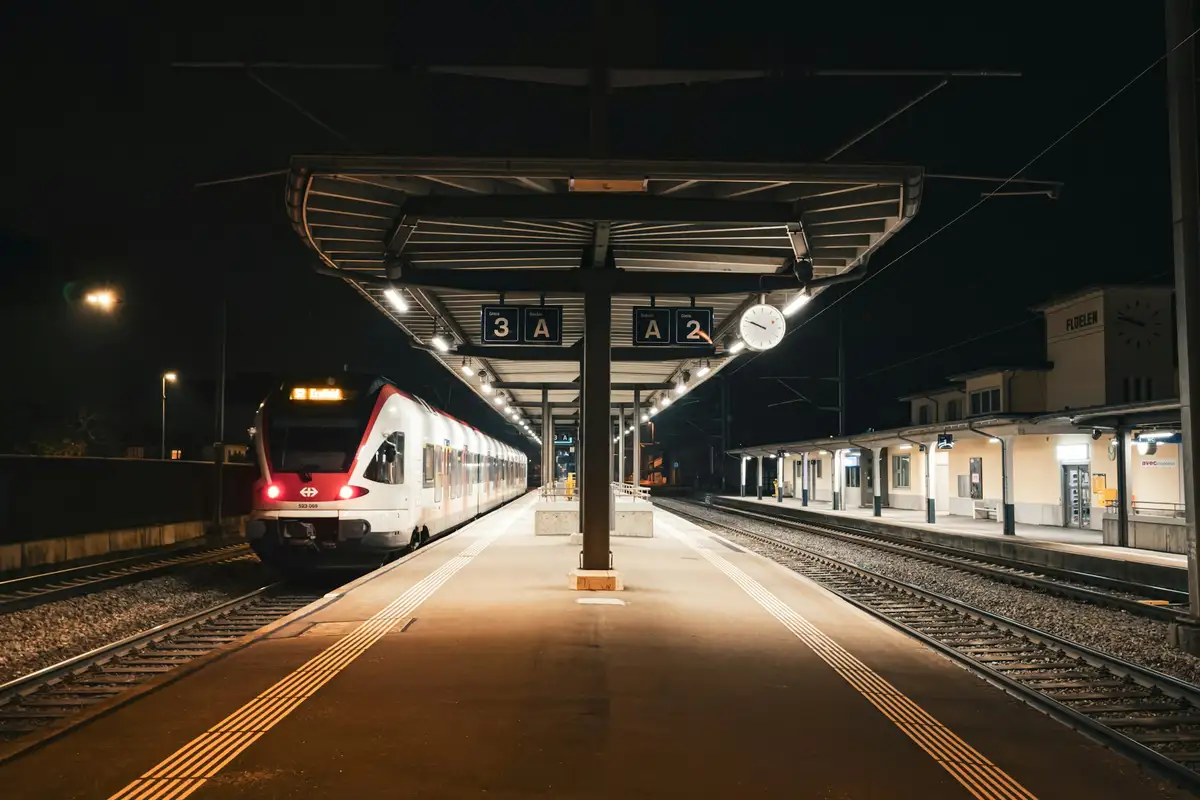
A night train between Hanoi and Đà Nẵng, last week. About nine hundred words written. I kept one paragraph.
One night out of three produced something, and that something fits in eight lines. If someone wants to call that a lifestyle, they’re welcome to.
What the train gives, and what I’d been asking for
I wrote in February, after a day with four connections between Portugal and Morocco, that I’d produced strictly nothing because the day was fragmented. An hour and twenty on a bus, forty minutes waiting, ten minutes for a connection. The minimum unit below which I’m useless is two hours in a row, and that day never once gave me two hours in a row.
The night train gives you that.
It gives you more than that. Nobody gets on, nobody gets off, nobody speaks to you. No connection to watch for, no departure board to check every ten minutes, no bag to drag from one platform to another. The world goes on without you having to account for it, which settles the question of messages by simply removing them.
On paper, it’s the longest block of continuous time in my entire month of April.
And I got one paragraph out of it.
What it takes away
The first thing missing is dumb and physical: a surface. The small table under the window is taken up by four people’s water bottles. Working on a bunk means lying down or half sitting up, laptop on your thighs, wrists hanging in the air, screen sixteen inches from your face and tilted sideways. I held that position for forty minutes before my right shoulder started to complain.
The second thing is social. A lit screen in a four-berth compartment is a lamp. It lights up three people trying to sleep, and there’s no way to make it discreet. I turned the brightness all the way down, then closed the laptop before midnight, not out of discipline but because the guy across from me had turned over three times.
The third thing is the one I hadn’t anticipated, and it’s the only interesting one.
At one in the morning, I’m writing. At four, I’m still writing, with a very clear sense that it’s going well. The next day in Đà Nẵng, in a room where you can hear the sea if you listen hard, I reread the nine hundred words. Half of it was rephrasing things already written elsewhere, a quarter went off in a direction I hadn’t chosen, and the rest actually held up.
Time was continuous. My attention wasn’t. That’s not the same resource, and I’d spent six months confusing the two, because one is measured in hours and fits on a calendar, while the other isn’t measured at all.
What I actually answer
I could stop here, except there’s still the part of the question I haven’t answered, the one about organization.
There isn’t one.
When someone asks me how I do it, at a table, in a hostel, or in a message, I answer yes, I work on trains. It’s a sentence I’ve said for years without thinking, and it’s true about one time out of three. I say it because it closes the conversation in a way that’s pleasant for everyone. It paints the picture of a life that holds together, where transit hours aren’t lost hours but repurposed ones, and the other person walks away satisfied.
The hours are lost. A good part of them, anyway. What this logbook tries to do is stop pretending otherwise, and the refusal of postures that sell well is written where it belongs, in what I refuse.
Working on the road gets presented everywhere as a lifestyle choice, with photos of laptops open on beaches where you couldn’t actually read a screen. Seen from the inside, it’s an organizational problem with no general solution, only an unpleasant accounting: this month, out of three theoretically favorable occasions, one produced eight lines.
I have no method to sell you on this. If I had one, it would show up in the count.
Rereading the file in Đà Nẵng, I checked the timestamps on the autosaves out of curiosity. The paragraph I kept was written at 10:40pm, about twenty minutes after leaving Hanoi station, while the train was still rolling through the suburbs and nobody had turned off their e-reader yet. Everything written after three in the morning went in the trash. The only usable piece of my night on a night train was written before the night really started.
What I can't tell you
- Is what I write at four in the morning actually worse, or am I rereading it with a bias, knowing what time it was written? I've never had these texts read by someone without giving them that context.
- Does a lower berth, with access to the table and window, change anything? I was on the top bunk, had no choice at booking, and don't have a second night to compare against.
- Do other kinds of work tolerate this same fragmentation? Translating, editing, sorting photos, answering mail, none of that asks the same thing of you as what I do, and I can only speak for my own work.
This choice follows the manifesto: no video: the verdict is meant to be read, not watched. read the manifesto
Latest articles
He took the case for my headphones. I was wearing the headphones.
My bag was open above me for three hours. The thief walked off with an empty case and a laptop, and never checked either one.
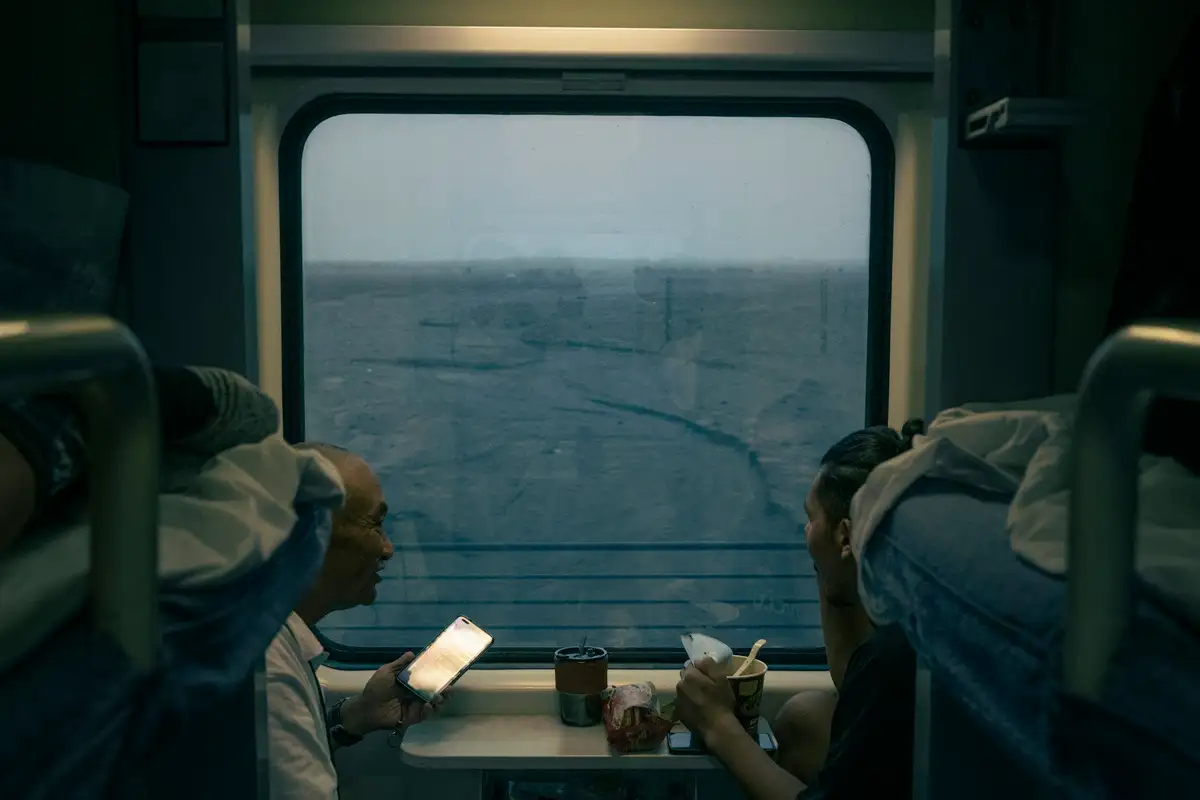
The Hanoi-Đà Nẵng night train sets its own rules
Four berths, a light that never turns off, and a bag you have to watch while asleep. Three constraints, three answers of very different bulk.

Two countries before breakfast
Faro, Seville, Tarifa, Tangier. Twelve hours, four connections, zero minutes of work, and one working power outlet.